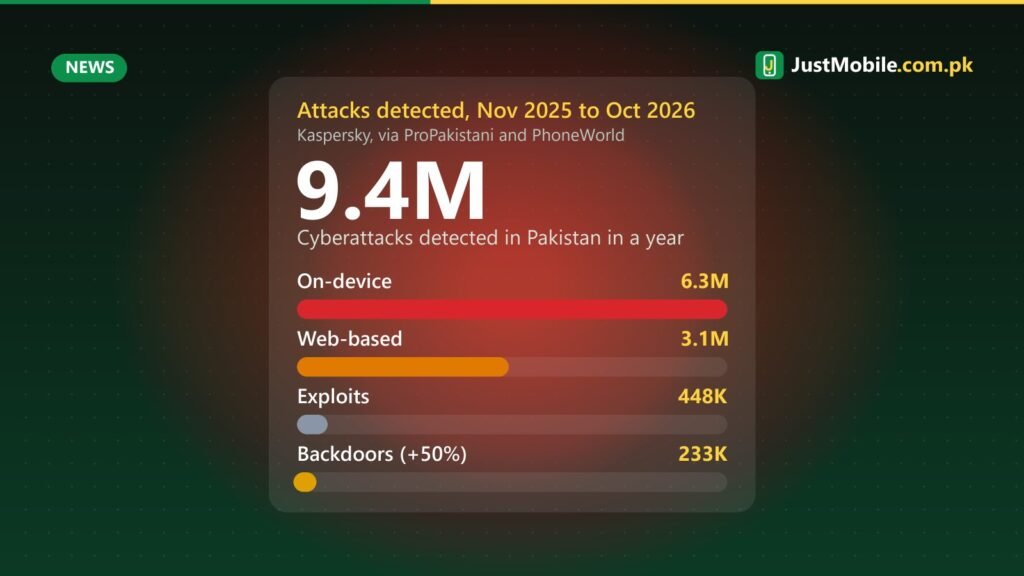
Cybersecurity company Kaspersky says its products detected more than 9.4 million cyberattacks in Pakistan between November 2025 and October 2026. The figures were shared at the Cyber Threat Intelligence Summit 2026 in Islamabad, ProPakistani and PhoneWorld report.
The numbers
| On-device attacks blocked | More than 6.3 million (24% of Kaspersky users in Pakistan were affected) |
|---|---|
| Web-based attacks | More than 3.1 million, including phishing and malicious websites (15% of users) |
| Backdoor attacks | More than 233,000, up 50% from a year earlier |
| Exploit attacks | More than 448,000, down 8% |
| APT groups tracked | Seven, including SideWinder and Mirage Kitten |
A backdoor is malware that quietly gives an attacker remote access to a device, so they can browse files and steal information without the owner noticing. Kaspersky also warned that criminals are using AI to build and change malicious tools faster and more cheaply, and that they increasingly misuse normal administrative software to avoid detection. The company says it has signed an agreement with Pakistan’s national cyber emergency team, PKCERT, to share threat information.
What it means for phone users
Much of this activity targets computers and organisations, but phones face the same tricks: fake links, infected app files and pages that steal passwords. A few habits block most of it:
- Install apps only from the Play Store or App Store. APK files shared on WhatsApp or Telegram, especially “modded” apps and fake delivery or bank apps, are a common way to plant malware.
- Keep your phone updated. Security patches close the holes that exploits use. If your phone no longer gets updates, be extra careful about what you install.
- Check app permissions. Be suspicious of any app that asks for Accessibility, notification access or “install unknown apps” without a clear reason.
- Do not open links in unexpected SMS or WhatsApp messages, even if they look like they come from a bank, courier or the PTA.
- Turn on two-step verification for WhatsApp, email and social media, and never share OTP codes.
If you are scammed or hacked, you can report it to the NCCIA through its new app or the 1799 helpline, as we explained in https://www.justmobile.com.pk/nccia-cyber-info-app-report-online-scams-fraud-hacking/.
Note: these figures come from Kaspersky’s own detections, so they show what its users encountered, not every attack in Pakistan.
Sources: ProPakistani, 21 Nov 2026; PhoneWorld, 21 Nov 2026.
0 comments