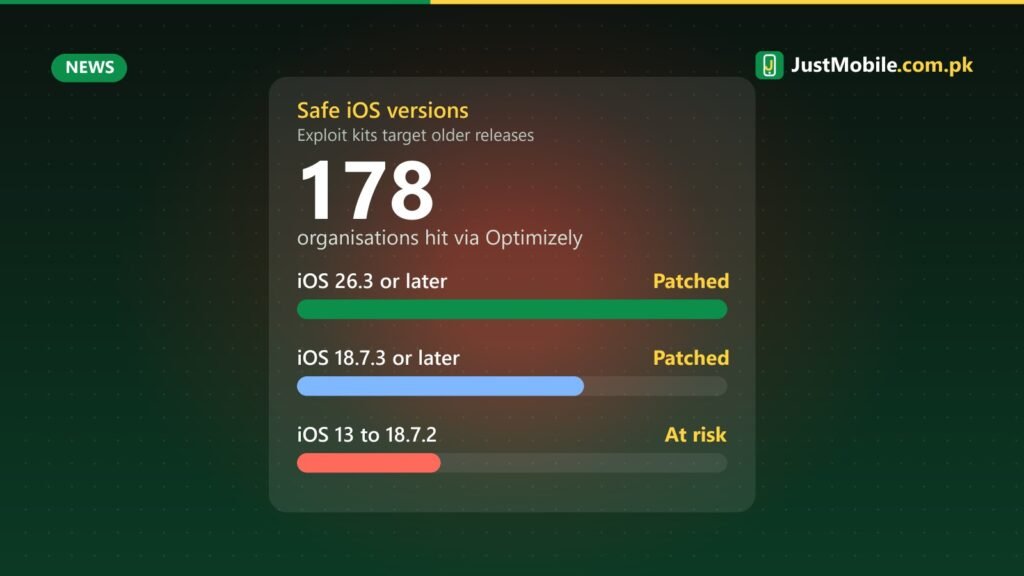
If you visited big international websites such as BBC, CNN or Zoom on 15 or 16 November, it is worth checking your iPhone’s software version and your card statements. Attackers planted malicious code in Optimizely, a service that many large websites use to test different versions of their pages, and that code was served to visitors of 178 organisations.
What happened
Optimizely says an unauthorised party exploited a vulnerability in its Experimentation product and used it to add JavaScript to some customer projects. Because the code came from Optimizely’s own servers, browsers trusted it like any other part of the page. Security researcher Scott Helme of Report URI, who first tracked the scripts, found the malware in 188 of the 1,611 Optimizely snippets his team examined. Other named sites include Salesforce, IKEA, HSBC, NPR and Air France.
According to the reports, the code could:
- steal card numbers, expiry dates and security codes typed into forms on affected pages;
- swap cryptocurrency wallet addresses shown on the page or copied to the clipboard;
- send cookies, page addresses and screenshots to the attackers;
- load two known iPhone exploit kits, Coruna and DarkSword, for visitors using older iOS versions.
Optimizely says it has fixed the flaw, removed the code, ended active sessions and revoked access tokens. Most infected scripts were taken down by Monday afternoon US time.
Which iPhones are at risk
The exploit kits targeted iOS 13 to iOS 17, and iOS 18 versions before 18.7.3. iPhones on iOS 18.7.3 or later, or iOS 26.3 or later, are patched against these tools. Researchers note that receiving the code does not prove a phone was actually compromised.
What you should do
- Update your iPhone: go to Settings > General > Software Update. Older models that cannot run iOS 26 should at least be on the latest iOS 18 release.
- Check your cards: if you paid on one of the affected sites on 15 or 16 November, watch your statements and ask your bank to block the card if you see anything odd.
- Check crypto transfers: confirm that any wallet address you copied from these sites was the one you intended.
Android phones were not named as a target of the exploit kits, but the card-stealing code ran in any browser. For more on staying safe, read our guide on PTA’s warning about OTP scams and how to spot deepfake videos on your phone.
Sources: The Hacker News, November 2026; Help Net Security, 17 November 2026; ProPakistani, 17 November 2026.
0 comments