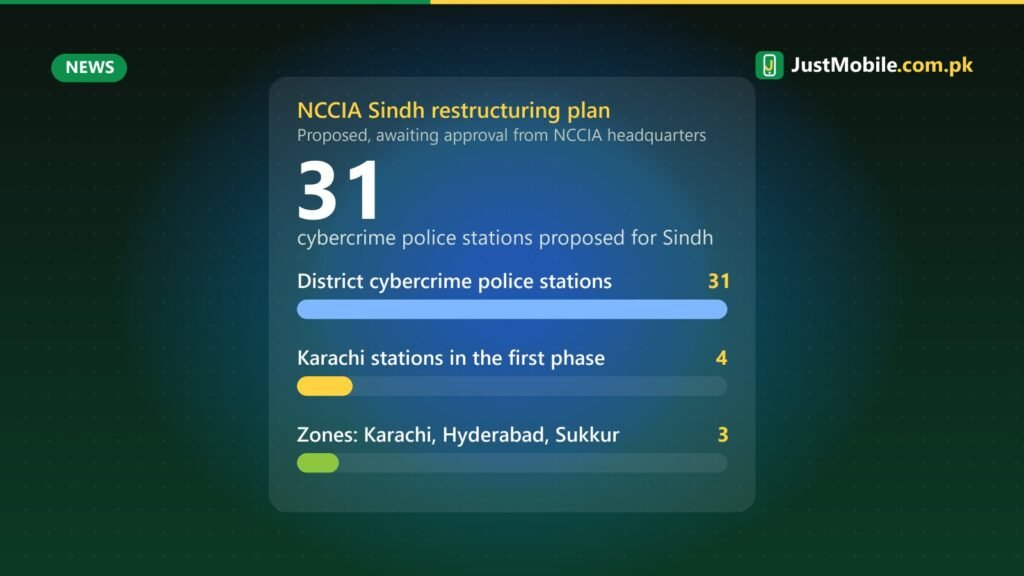
If your phone is hacked or you lose money to an online scam in Sindh today, reporting it usually means a trip to one of a few cybercrime offices in the big cities. A new proposal from the National Cyber Crime Investigation Agency (NCCIA) would change that by putting a cybercrime police station in every one of Sindh’s 31 districts.
What the plan proposes
According to PhoneWorld, NCCIA Sindh has prepared the restructuring plan and forwarded it to the agency’s headquarters. Its main points are:
- 31 cybercrime police stations, one per district including Karachi’s districts, each led by an officer of assistant director rank.
- Sindh split into three zones: Karachi, Hyderabad and Sukkur, each headed by a senior officer, with deputy or additional directors overseeing regional work.
- In Karachi, four police stations in the first phase, with the city’s eight districts grouped into three zones and a Cyber Crime Reporting Centre under each.
- District-level judicial arrangements and forensic laboratories, so complaints can be handled locally instead of being sent to another city.
- Recruitment of around 6,000 personnel, according to South Zone Additional Director Shahzad Akbar, who said the agency’s responsibilities have grown.
The report adds that the agency may eventually be renamed something like “Cyber Police” or “Pakistan Cyber Force”. This follows the Prime Minister’s recent instruction to overhaul the NCCIA quickly and bring in AI and IT experts, which we covered when cybercrime complaints started moving to the Pak ID app.
What is not decided
This is a proposal, not a done deal. It still needs approval from NCCIA headquarters, and no timeline, budget or recruitment schedule has been published. It is also not clear how quickly forensic labs could be set up outside Karachi, Hyderabad and Sukkur, which is where much of the delay in cybercrime cases comes from.
Why it matters for phone users
Most cybercrime in Pakistan now starts on a phone: hacked WhatsApp and Facebook accounts, fake bank calls, OTP scams and blackmail. Complaints passed 150,000 in a year, and recent incidents such as the alleged hack of the ARY News website show the problem is growing. Local stations could make it easier for people in smaller towns to report a case and get evidence examined. Until then, you can still file a complaint through the NCCIA’s online portal or the Pak ID app, and the basics remain the same: never share OTPs, turn on two-step verification and be wary of anyone who asks for money to “recover” an account.
Sources: PhoneWorld, 27 November 2026; PhoneWorld (national cyber police plan), 26 November 2026.
0 comments